A Call for a Paradigm Shift in Schizophrenia Treatment: Reassessing Long Term Antipsychotic Use and the Evidence for Psychosocial Interventions
Walter Keim
Støleveien 180
N-4887
Grimstad
Norway
Correspondence: Walter Keim Email: walter.keim@gmail.com
Cognitive Behavioral Therapy (CBT) was significantly superior to treatment as usual (TAU) for the outcome “overall symptoms”, “quality of life” and “functioning” WHO 2023 (mhGAP) guideline
Abstract
Long term antipsychotic treatment shows diminishing benefits, weak evidence for first episode psychosis, and substantial confounding from withdrawal effects. Psychosocial interventions—particularly Cognitive Behavioral Therapy and Open Dialogue—demonstrate superior functional and recovery outcomes. Current evidence supports shifting from lifelong antipsychotic maintenance toward recovery oriented, medication free or reduced medication approaches.
Main Text
International concern is growing regarding the
dominance of the biomedical model in mental health care. The United
Nations Special Rapporteur on the right to health has argued that
global mental health systems rely excessively on psychotropic
medication and insufficiently on psychosocial interventions¹. This
critique aligns with emerging evidence questioning the long term
effectiveness of antipsychotics and highlighting the benefits of
psychosocial approaches²,³.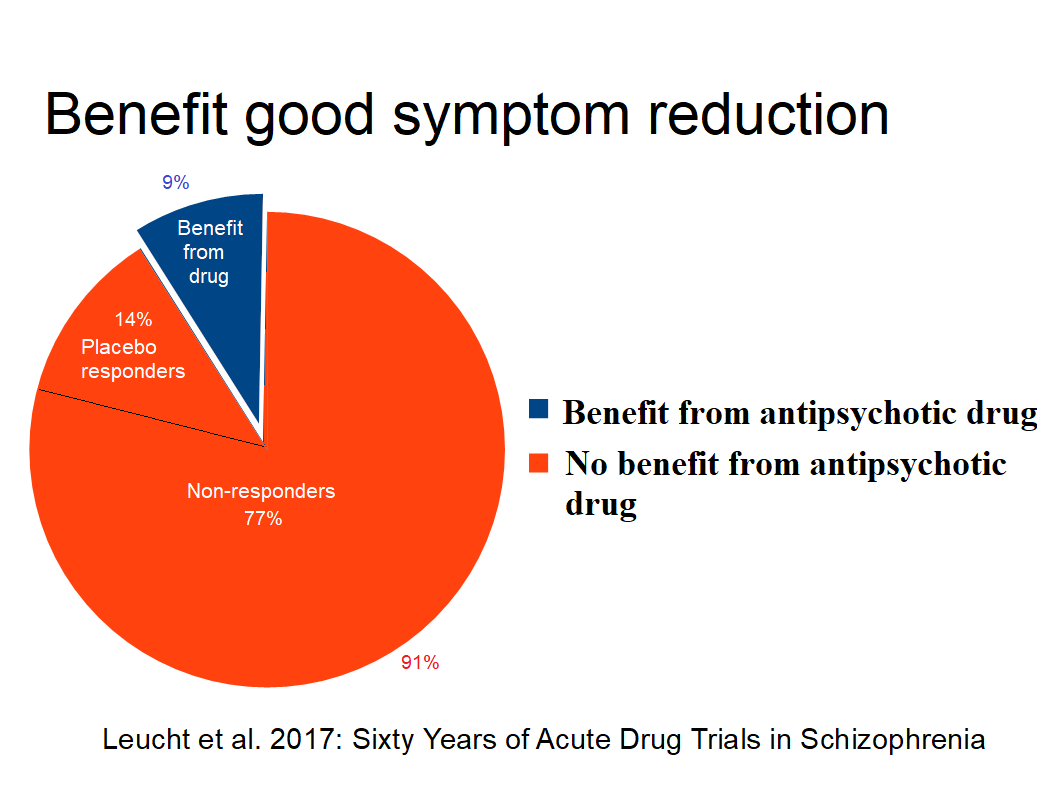
Figure 1: Time-dependent effect of antipsychotic discontinuation
Antipsychotics reduce relapse rates from 65% to 27% within one year⁴. However, this benefit is strongly time dependent, with meta analytic evidence showing substantial decline after two years⁵,⁶. Long term functional outcomes may even favor discontinuation: a four year randomized controlled trial reported better functioning three years after discontinuation compared to maintenance therapy⁷.
No placebo controlled trials include antipsychotic naïve participants, limiting the validity of conclusions about efficacy in first episode psychosis⁹. Systematic reviews highlight that withdrawal effects in placebo groups compromise the interpretability of existing trials¹⁰. Despite this, antipsychotic prescribing remains nearly universal in some countries, with rates exceeding 97% in first episode psychosis¹¹.
Across sixty years of placebo controlled trials, only 9% of patients achieve a “good response” attributable to antipsychotics¹². The majority do not experience clinically meaningful improvement, raising questions about the centrality of antipsychotics in acute care.
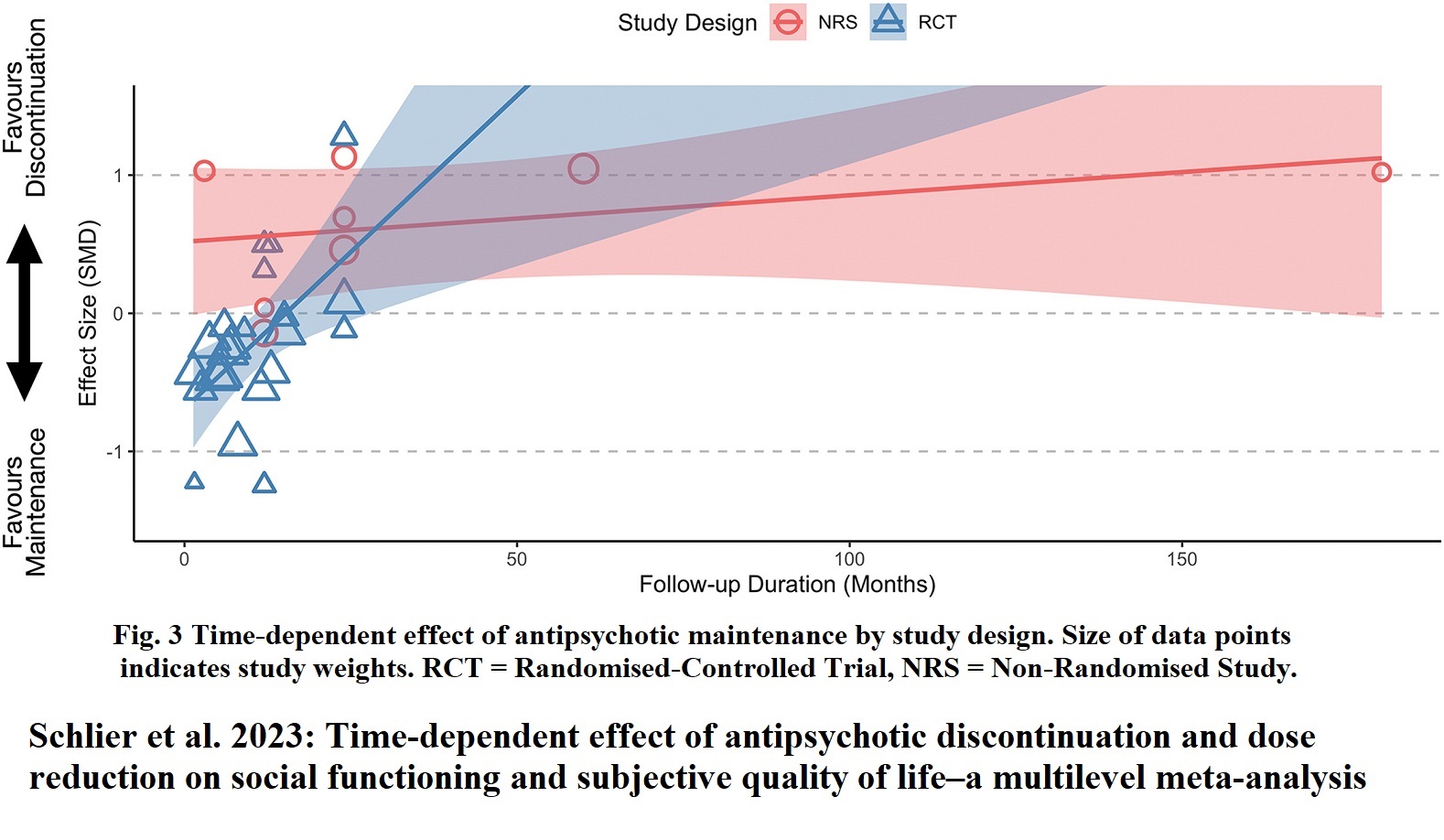
Figure 2: Good acute symptom reduction
Systematic reviews find no robust evidence supporting long term antipsychotic therapy¹³. The CATIE trial, involving 1,124 participants, reported a 72% discontinuation rate, underscoring tolerability and effectiveness challenges²⁰. These findings suggest that long term pharmacotherapy may not align with patient experience or long term recovery trajectories.
Psychosocial interventions—including Cognitive Behavioral Therapy, supportive psychotherapy, and Open Dialogue—demonstrate superior outcomes in symptoms, functioning, and quality of life²,see WHO 2023 (mhGAP) guideline3, and Ranjan, R. et al. 2025¹⁴. Long term observational data from Open Dialogue show substantially lower medication use, reduced disability, and fewer readmissions¹⁵.
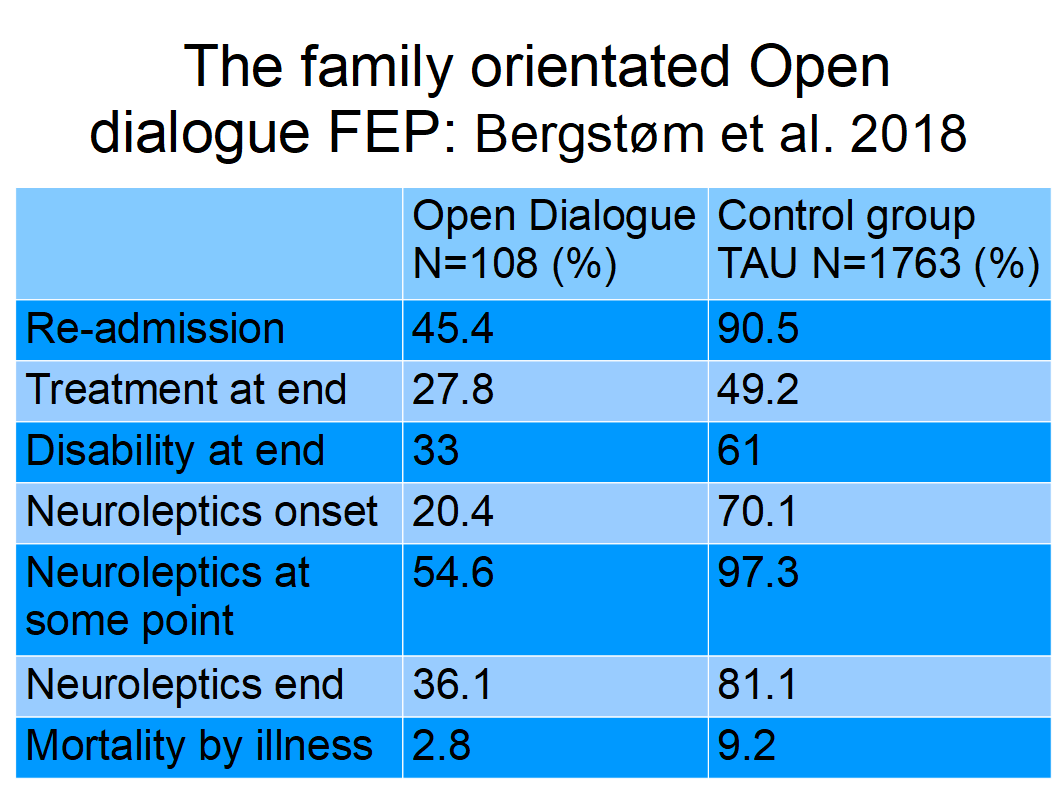
Figure
3: Open dialogue recovery rates
Despite strong evidence, these interventions remain underutilized due to systemic and cultural barriers¹⁶,¹⁷.
Some authors describe medication free approaches as ideological²¹. However, this framing assumes that antipsychotics are both effective and tolerable long term—conditions not supported by current evidence. A rational, evidence based approach requires reconsidering the default of lifelong medication and expanding access to psychosocial interventions.
The cumulative evidence challenges the assumption that lifelong antipsychotic treatment is necessary or beneficial for most individuals with schizophrenia. Psychosocial interventions demonstrate superior long term outcomes and align with patient preferences¹⁸,¹⁹. A recovery oriented paradigm emphasizing medication free or reduced medication approaches is warranted and consistent with international calls for reform.
References
Pūras, D. Report of the Special Rapporteur on the right of everyone to the enjoyment of the highest attainable standard of physical and mental health. United Nations Human Rights Council (2017).
Bighelli, I. et al. Cognitive behavioural therapy for schizophrenia: A systematic review and meta-analysis. Psychol. Med. 48, 1–12 (2018).
World Health Organization. mhGAP Intervention Guide, Version 3.0. WHO (2023).
Leucht, S. et al. Antipsychotic drugs versus placebo for relapse prevention in schizophrenia: A systematic review and meta-analysis. Lancet 385, 1376–1384 (2015).
Ceraso, A. et al. Maintenance treatment with antipsychotic drugs for schizophrenia. Cochrane Database Syst. Rev. 3, CD008016 (2020).
Leucht, S. et al. Relapse prevention in schizophrenia with new-generation antipsychotics: A systematic review and exploratory meta-analysis. Am. J. Psychiatry 169, 120–129 (2012).
Schlier, B. et al. Long-term outcomes after antipsychotic discontinuation: A meta-analytic extrapolation. Schizophr. Bull. 49, 1–10 (2023).
Sommer, I. E. et al. Long-term outcomes after guided antipsychotic discontinuation: A 4-year randomized controlled trial. Psychol. Med. (2025).
Dalsbø, T. K. et al. Antipsychotics for early psychosis: A systematic review. Norwegian Institute of Public Health (2019).
Danborg, P. B., Simonsen, S. & Gøtzsche, P. C. Long-term antipsychotic use: A critical review of placebo-controlled trials. Psychother. Psychosom. 88, 1–10 (2019).
Bergström, T. et al. Real-world antipsychotic prescribing in Finland: A national registry study. Nord. J. Psychiatry 72, 1–8 (2018).
Leucht, S. et al. Sixty years of placebo-controlled antipsychotic drug trials in acute schizophrenia: Systematic review and meta-analysis. Mol. Psychiatry 22, 1–9 (2017).
Sohler, N. et al. Weighing the evidence for harm from long-term treatment with antipsychotic medications: A systematic review. Am. J. Orthopsychiatry 85, 1–13 (2015).
Ranjan, R. et al. Effectiveness of psychological interventions for positive and negative symptoms in schizophrenia: A systematic review and network meta-analysis. Schizophr. Res. (2025).
Bergström, T., Seikkula, J. et al. The Open Dialogue approach in Finland: 19-year outcomes of first-episode psychosis. Psychosis 10, 1–12 (2018).
Polese, D. et al. Psychotherapy in treatment-resistant schizophrenia: A 25-year systematic review and exploratory meta-analysis. Schizophr. Res. 210, 1–9 (2019).
Tandon, R. et al. Psychosocial interventions and functional recovery in schizophrenia—Realizing opportunities today. npj Schizophr. 11, 1–8 (2025).
McHugh, R. K. et al. Patient preferences for psychological vs. pharmacological treatments. J. Clin. Psychiatry 74, 595–602 (2013).
Angermeyer, M. C. et al. Public attitudes toward medication-free treatment in psychosis. Soc. Psychiatry Psychiatr. Epidemiol. 52, 1–9 (2017).
Levine, S. Z. et al. Dropout patterns in the CATIE trial: Implications for long-term antipsychotic treatment. Schizophr. Res. 136, 1–7 (2012).
Leucht, S., Rodolico, A. Empowering clinicians and patients in antipsychotic dose reduction for schizophrenia: the role of online tools. Schizophr 11, 153 (2025). https://doi.org/10.1038/s41537-025-00699-7
Data Availability
No new data were generated for this manuscript.
Competing Interests
The author declares no competing interests.
Acknowledgements
None.